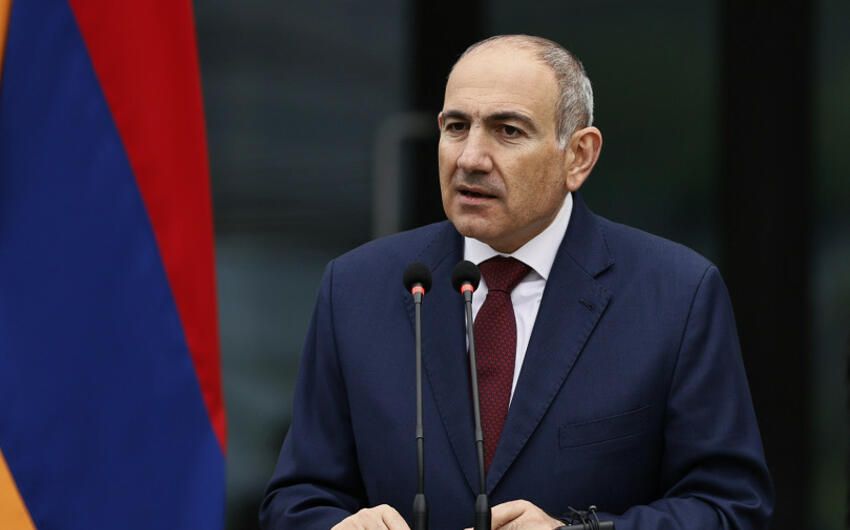
The parliamentary elections of 7 June 2026 are highly internationalised, caught between West and East, unlike the elections of 2018 and 2021, which were above all a struggle between the new regime and the old. These elections are a strategic turning point for Armenia: confirming the peace process launched with Azerbaijan and the rapprochement with Europe, or returning to alignment with Russia.
Two visions of Armenia
Nikol Pashinyan’s Civil Contract, a reformist, liberal party and the favourite in the elections, defends the idea of a “Real Armenia”, limited to its internationally recognised borders.1 As part of the peace process with Azerbaijan, Nikol Pashinyan wants to amend the Constitution2 to bring it into line with the requirements of normalisation with Ankara and Baku. This would complete Armenia’s integration into Western structures, illustrating its gradual distancing from Russia.
According to the latest poll by the International Republican Institute (IRI, May 2026), voting intentions stand at 32% for Nikol Pashinyan, 6% for Samvel Karapetyan and 3% for Robert Kocharyan.3
The opposition, by contrast, proposes restoring relations with Moscow and rejects any change to the Constitution. It includes the nationalist, pro-Russian Armenia Alliance coalition of Robert Kocharyan (president of Armenia from 1998 to 2008), to which the Armenian Revolutionary Federation belongs, and the Strong Armenia alliance of Samvel Karapetyan, an Armenian-Russian-Cypriot oligarch who heads the Tashir Group conglomerate.4
The narrative of fear as an electoral weapon
During the campaign, both camps use fear to mobilise voters. Nikol Pashinyan claims that an opposition victory would lead to war and the loss of territory.5 He uses a populist tactic, presenting himself as the guarantor of national survival and framing the choice as one between catastrophe and himself.
Conversely, the opposition accuses the government of endangering Syunik and the very future of Armenia through the peace process with Baku. Strong Armenia even raises the prospect of 300,000 Azerbaijanis being settled in the country.6 Nikol Pashinyan has denied that the subject was ever raised in talks with Azerbaijan.7
Azerbaijan’s use of fear
These narratives, and this fear, are also used by Azerbaijan. Baku is backing Nikol Pashinyan in these elections,8 and Ilham Aliyev has warned that if the opposition came to power, “it is the Armenian people who will suffer”.9 The official Azerbaijani discourse on “Western Azerbaijan” claims that when the Soviet Union collapsed, 300,000 Azerbaijanis had to leave Armenia (in reality, there were never 200,000 Azerbaijanis in Soviet Armenia)10: the idea would be to bring them back to Armenia.
Armenia, a target of Russian hybrid warfare
Several hybrid-warfare tools are currently being used to discredit Nikol Pashinyan and undermine trust in the West: Doppelgänger (fake sites imitating real media outlets), Matryoshka (disinformation via anonymous social-media pages, amplified by bots and citing real media) and Storm-1516 (AI-generated content and multilingual deepfakes spread through fake news sites). According to NewsGuard, pro-Russian false stories targeted Armenia between April and November 2025: a supposed $17 million villa bought in Canada by the Prime Minister, a €100,000 stay by his wife in a hotel in Turkey, and the sale of a Christian relic to a French billionaire.11
As Armenia draws closer to the EU, which supports Nikol Pashinyan, Russia is seeking to preserve its influence by indirectly backing the pro-Russian opposition and presenting itself as the main guarantor of Armenian security: it plays on Armenians’ fears. Samvel Karapetyan, Moscow’s favourite, is moreover suspected of having ties to the FSB, which he denies.12
Notes
-
Armenpress, “Real Armenia ideology is about protecting and developing our identity, says Pashinyan”. ↩
-
Armenpress, “Pashinyan: New constitution should not reference Declaration of Independence”. ↩
-
International Republican Institute, “Public Opinion Survey: Residents of Armenia, May 2026”; OC Media, “Lead of Pashinyan’s Civil Contract party widens in new poll” (23% undecided and 21% declining to answer). ↩
-
OC Media, “Who’s who in Armenia’s 2026 parliamentary elections?”. ↩
-
OC Media, “Pashinyan claims Armenia faces war if opposition wins parliamentary election”, March 2026. ↩
-
OC Media, “Criminal cases, insults and claims of foreign control: Armenia’s pre-election campaign heats up”. ↩
-
Armenpress, “Pashinyan dismisses opposition claim on relocation of 300,000 Azerbaijanis as fabricated lie”; Armenpress, “Mirzoyan dismisses claims about resettling 300,000 Azerbaijanis in Armenia as “absurd”“. ↩
-
OC Media, “Azerbaijan’s media apparatus goes all-in for Pashinyan”. ↩
-
OC Media, “Opinion: The risks of Pashinyan’s fear-mongering tactics ahead of Armenia’s elections”; CivilNet, “War and peace framing of Armenia’s parliamentary election”. ↩
-
The 1979 Soviet census counted 160,841 Azerbaijanis in the Armenian SSR (5.3% of the population), and around 85,000 in 1989. Library of Congress, Armenia: A Country Study, “Ethnic Minorities”. ↩
-
Detector Media, “Fake about the Armenian Prime Minister’s mansion in Canada”; The New Arab, “Pro-Russia network targets Armenian PM in disinformation campaign”. ↩
-
OC Media, “Investigation suggests Karapetyan had ties to Russia’s FSB”, May 2026 (based on an investigation by The Insider). ↩