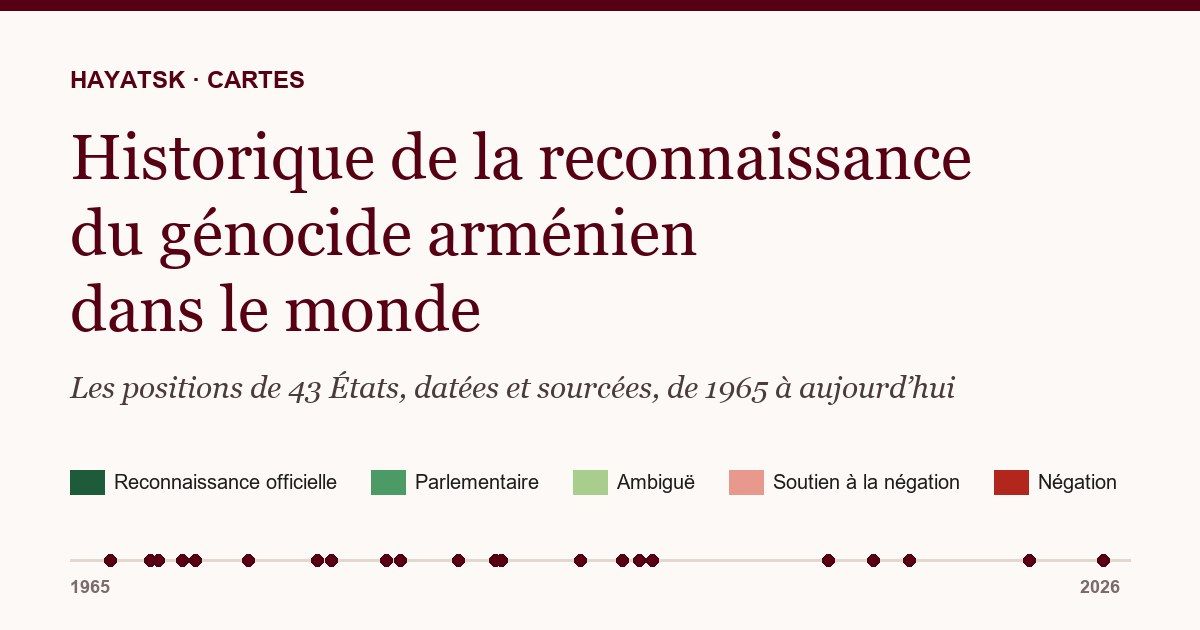
From Uruguay in 1965 to the present day, the map traces, state by state, the history of the recognition of the Armenian Genocide. When it opens, an animation runs through every date on which a state recognised the genocide or changed its position. You can then click on each date and each country.
The map does not simply set countries that recognise the genocide against those that do not: it distinguishes the nature of each act. A law or a statement by the head of state does not carry the same weight as a parliamentary resolution, a text that avoids the word “genocide”, or recognition by cities and regions. At the other end, Turkey and Azerbaijan officially deny the genocide, and Pakistan supports their position; it only established diplomatic relations with Armenia in 2025. The Republic of Artsakh (Nagorno-Karabakh), proclaimed in 1991 in the name of the right of peoples to self-determination, is shown hatched: its authorities officially recognised the genocide.
Each act is dated and linked to its source. The classification rules and the disputed cases (the Netherlands, Denmark, Bulgaria, Libya, Israel) are explained in the “Sources et méthode” panel. The interactive map itself is in French.